Story / Bolivia / Guide
The Salar de Uyuni is two different planets sharing one address. Visit in the dry season and you get a cracked white desert that runs to the horizon. Visit after the rains, when a few centimeters of water flood the largest salt flat on Earth, and the horizon disappears entirely.
Dry season, roughly May to October, is the classic salar: white polygonal salt crust, the cactus island of Incahuasi, hard blue skies. Wet season, roughly December to March, is the mirror. Summer rain pools on a surface so flat that NASA uses it to calibrate satellites, and the water has nowhere to go. What it does instead is turn 10,000 square kilometers of Bolivia into the sky's reflection.
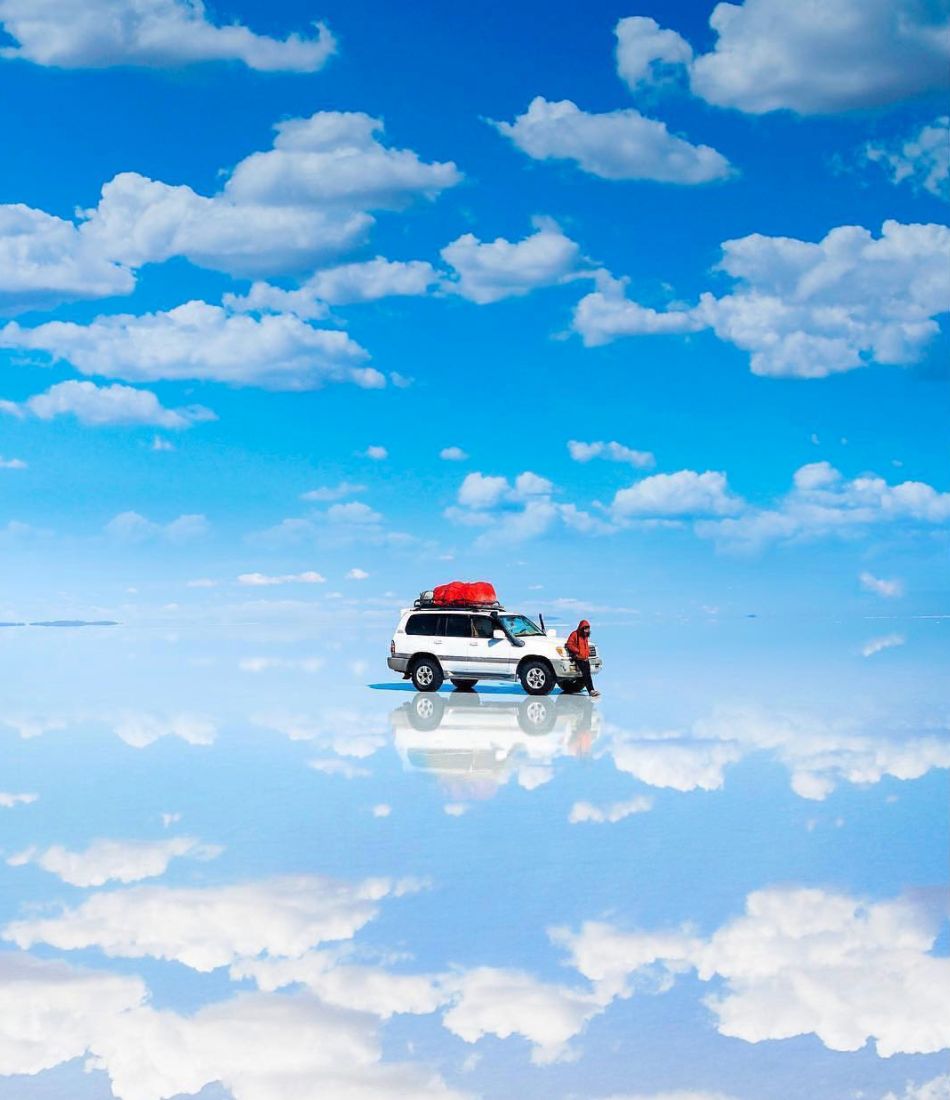
The mirror needs three things at once: standing water, clear sky, and no wind. Rain alone is not enough, and neither is a flooded flat under grey cloud, which just looks like a lake. The best frames usually come a day or two after rain, when the sky clears and the water settles glassy. Wind is the dealbreaker. Even a light breeze wrinkles the surface and the reflection falls apart, so dawn, when the altiplano air is stillest, is the photographer's hour.
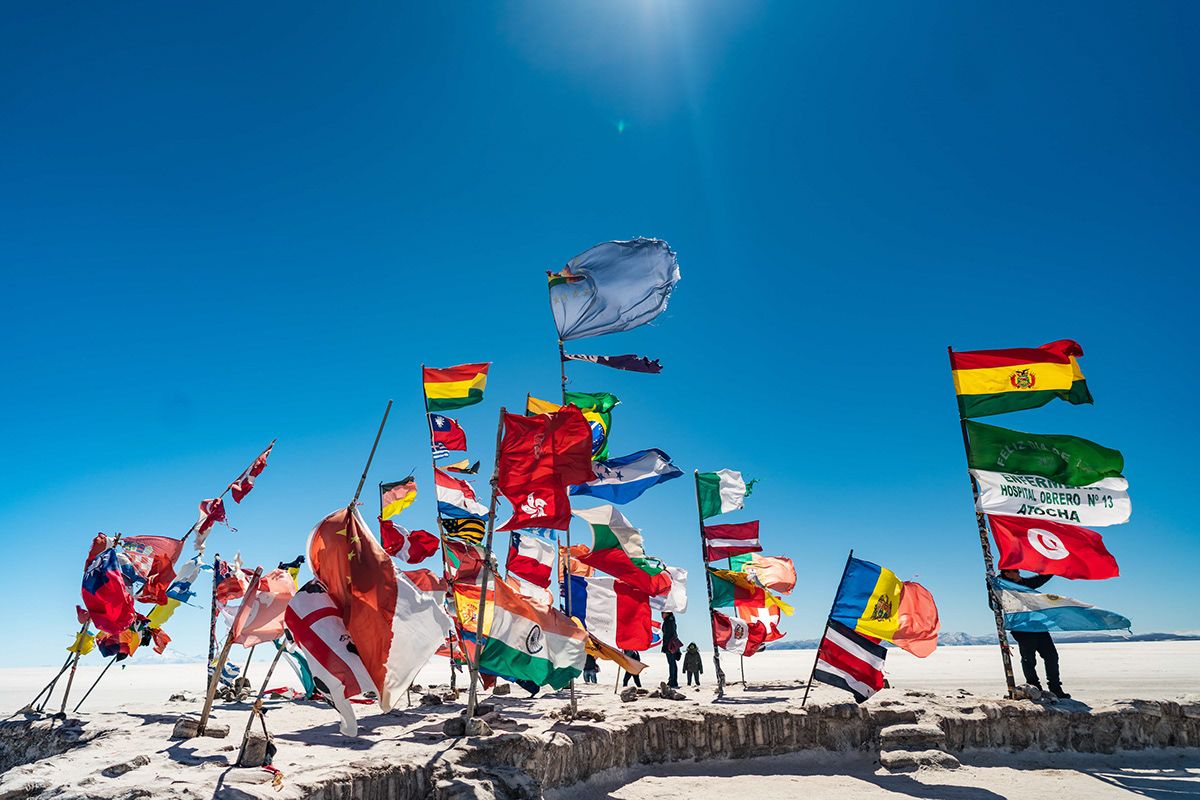
Most tours enter from the town of Uyuni or Colchani, at the flat's edge, where the water is shallow and the mirror starts almost immediately. The Dakar monument and its ring of world flags give you a fixed subject when the emptiness gets abstract. Drive further out and the landmarks vanish, which is either the problem or the entire point. Either way, bring a subject: a vehicle, a person, anything with scale. A mirror with nothing in it is just a screensaver.
Get low. The reflection lives in the first inch above the water, and a low camera doubles whatever sky you have. Expose for the highlights and let the shadows fall where they want: salt and sky will blow out long before the midtones complain, and a clipped white mirror looks like nothing at all. Work fast on compositions, because the same thin water that makes the mirror also makes reflections of you, your tripod, and your footprints. And when the session ends, rinse everything. Salt water eats boots, tripods, and camera bags with real enthusiasm.
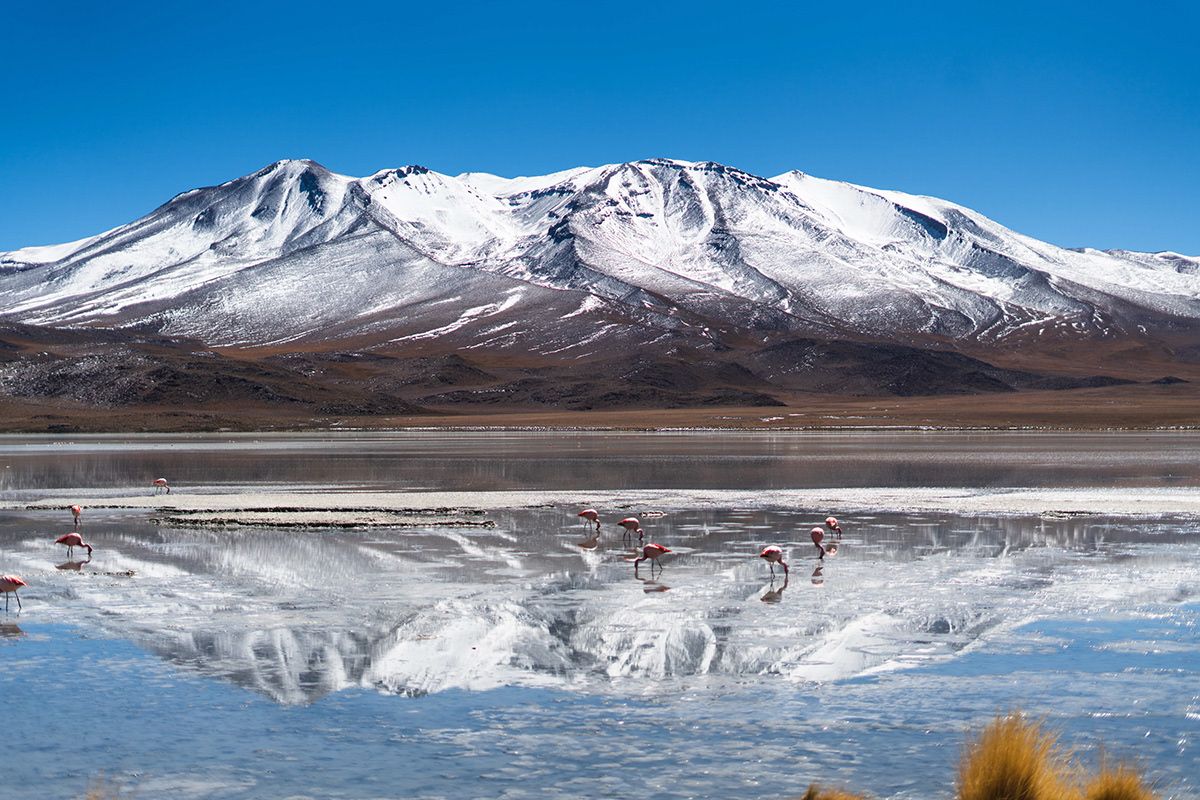
The salar is the headline, but the multi-day tours continue into the Eduardo Avaroa reserve, where the altiplano turns red, green, and flamingo pink. Laguna Colorada burns red with algae, and three species of flamingo feed in water that looks like wine. It is the perfect counterweight to the flats: all color, no symmetry, and a photographer standing on the rocks wondering how one country fits this much range.
The full set is in the Uyuni gallery. Bolivia's national tourism board featured this work, and the mirror season is why.